

From Forest to Woodshop:
Furniture & Wood Products Intensive
8-Week Fall Intensive | September 13 - November 6, 2026
Orientation Sunday, September 13 from 2pm to 6pm (opening light dinner served)
Class meets M-F, 9am to 5pm
Students should anticipate spending at least 25 additional studio hours on weekends and/or evenings to complete assignments and practice skills
Downtown Brattleboro location
Forest and industry field trips
Fully equipped, dedicated learning space with Sjoberg workbenches
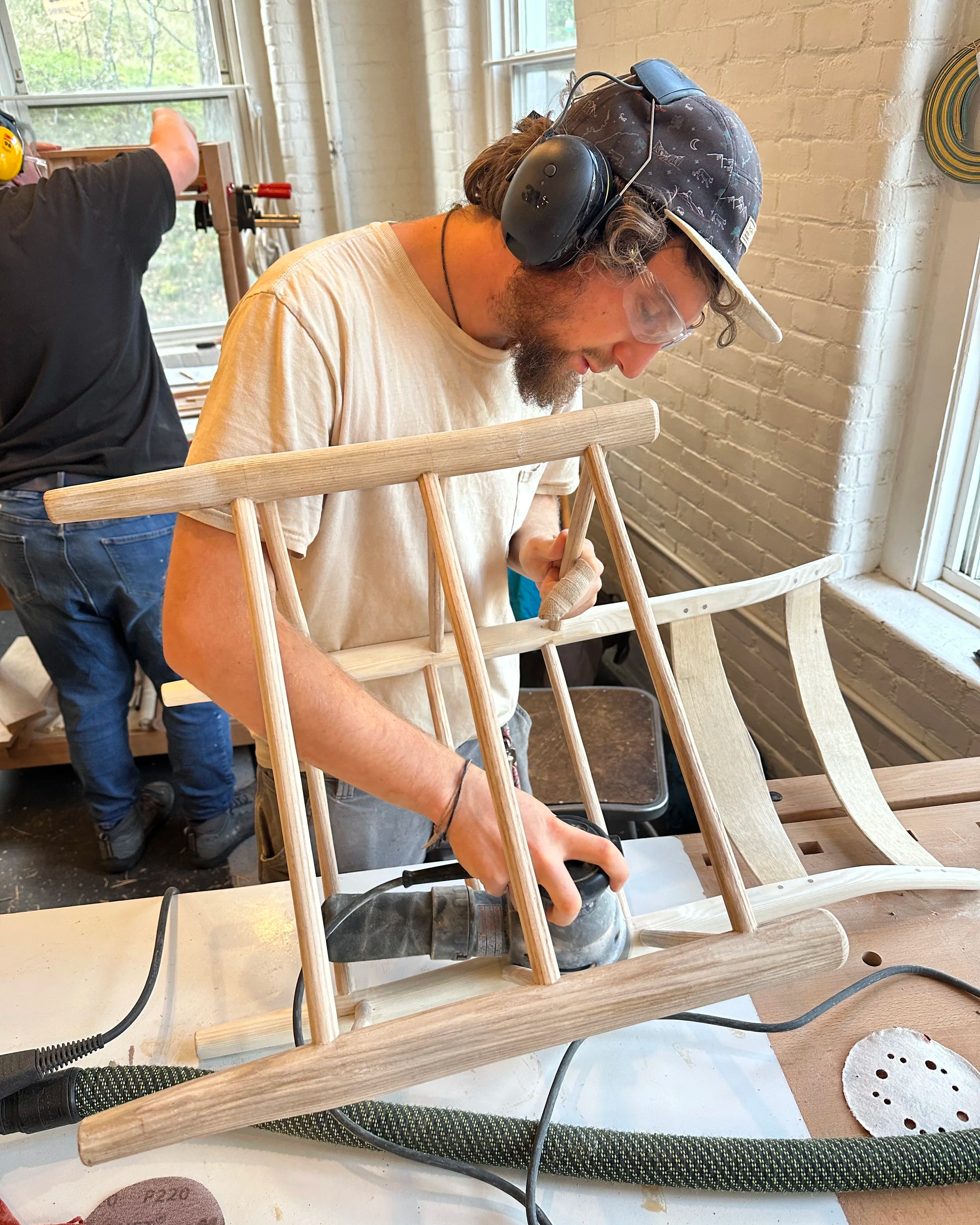
HatchSpace is pleased to offer an 8-week, full-time, 320-hour intensive program in wood furniture and products innovation starting in the fall of 2026. Our woodworking immersion program is rooted in an integrated approach of study from forest to woodshop and offers participants the opportunity to study wood as a material, as well as methods of manipulation that support furniture and product design through sourcing, designing, drawing, cutting, sawing, joining, bending, and glueing.
Delivered in downtown Brattleboro, Vermont, and surrounded by some of the world’s finest hardwood forests, students will gain not only the knowledge of fundamental woodworking practices, but also an awareness of the interconnected field of sustainable forestry. The curriculum includes both traditional and advanced techniques, blending craftsmanship with cutting-edge technology.
Through project-based assignments, field trips and a rotating roster of expert instructors, students will develop essential woodworking and design skills. They will also gain hands-on experience with a variety of tools, from hand planes to CNC machines, and milling equipment to laser cutters.
Students leave with a Certificate of Completion.
The Program
The curriculum is divided into four project-based modules, each of which focuses on different conceptual and technical lessons for working with wood. Students will benefit from a number of expert instructors, and make at least four pieces of fine furniture.
Module 1: Wood as Material
(Weeks 1 - 3)
Green Woodworking, Hand Skills, Sustainable Wood Harvesting and Crafting Objects with Purpose

-
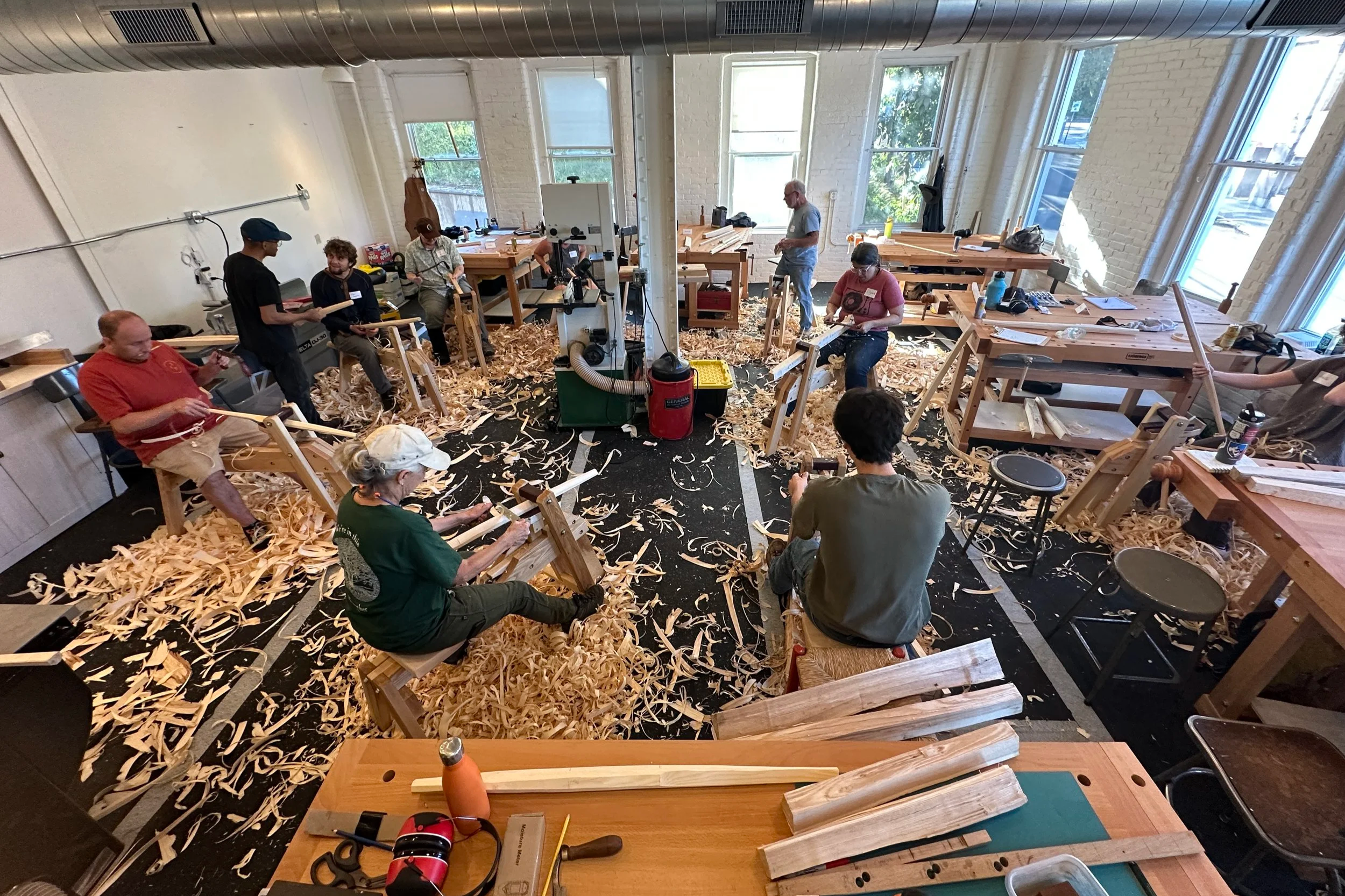
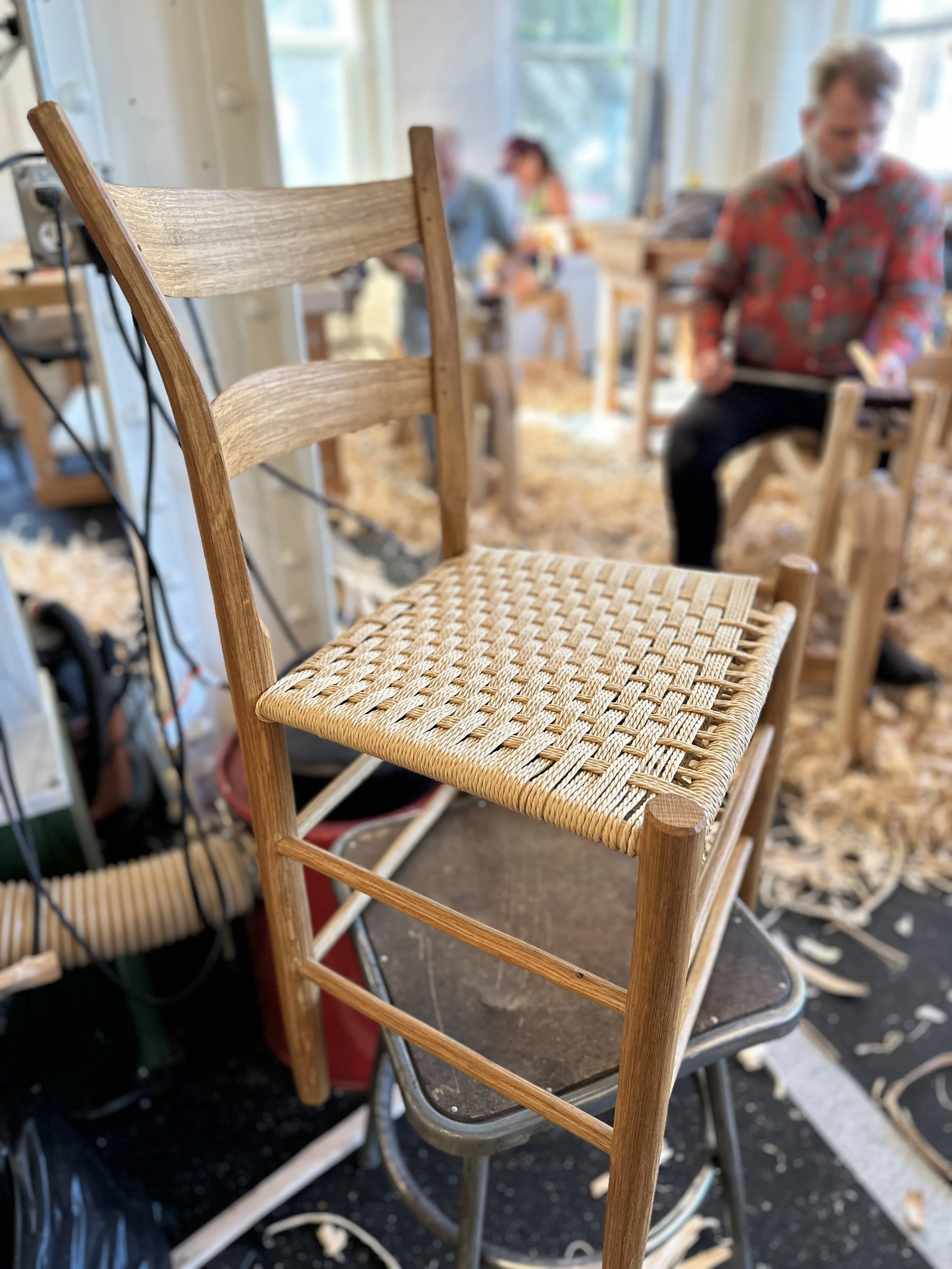
From day one, students will be making hands-on in our workshop with the first lessons taught through the instruction of a greenwood ladderback chair. Students will be introduced to sustainable silvicultural systems or wood harvesting techniques, which participants will see up close in the field - the forests of Vermont - and understand the impacts of each method on wood products. From forestry to the sawmill, students will learn first-hand how wood is harvested from our forests, and gain an awareness of the opportunities and challenges confronting the forest products industry.
Wood as a Material: Students will gain an understanding of the fundamental characteristics of wood, including the dynamic qualities of wood movement and the importance of understanding the basic principles of wood grain.
Green Woodworking Techniques: Students will be introduced to green woodworking, which is the use of freshly milled lumber that still contains a high level of moisture. Students will explore fundamental ways in which green wood is manipulated, from riving, shaping, bending and joining techniques and using greenwood tools such as a drawknife and shave horse.
Forest Visit & Wood Selection: Students will visit a Vermont hardwood forest and a local sawmill, gaining insight into forestry best practices, what to look for when selecting wood from a lumber yard, as well as greenwood selection principles.
Fundamentals of Hand Skills: Participants will be introduced to and practice core hand skill techniques including the use and tuning of chisels, hand planes, spokeshaves, scrapers, drawknives, and other edge tools, as well as tool sharpening techniques.
-
Students end the module with a ladderback chair with woven seat either completed or nearly completed. We say nearly completed as the concept of ‘finished’ or ‘complete’ can be a subjective term within the world of fine woodworking projects. Individual students may wish to spend additional time completing the project with their newly acquired skills outside of scheduled class hours.
-
Heather Tauck, Tom Bodett, and Charles Thompson (see section below for bios).
Module 2: Foundations of Making
(Weeks 4 & 5)
Intro to milling, machine room safety, principles of joinery & understanding technical drawings for building furniture
-
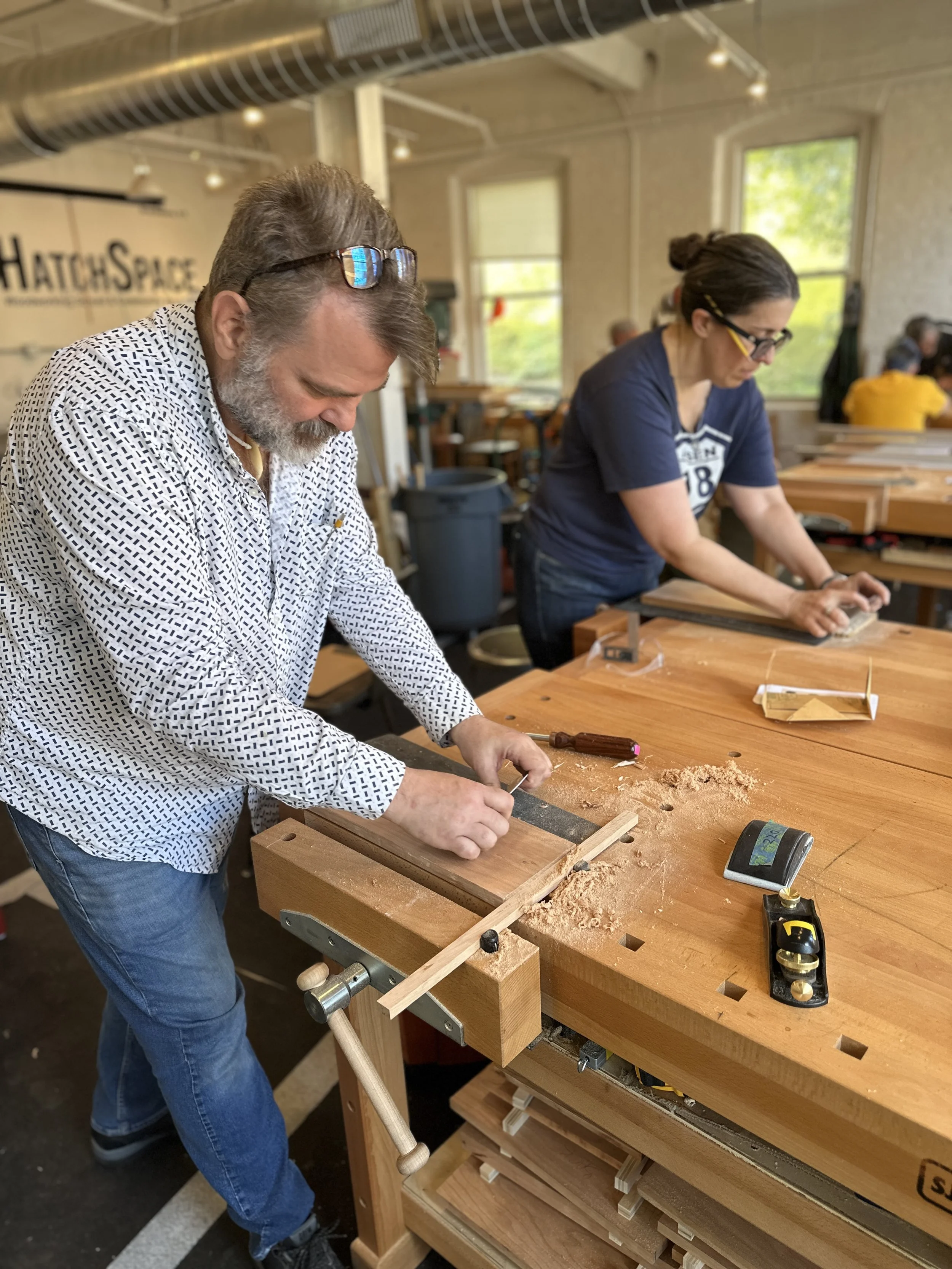
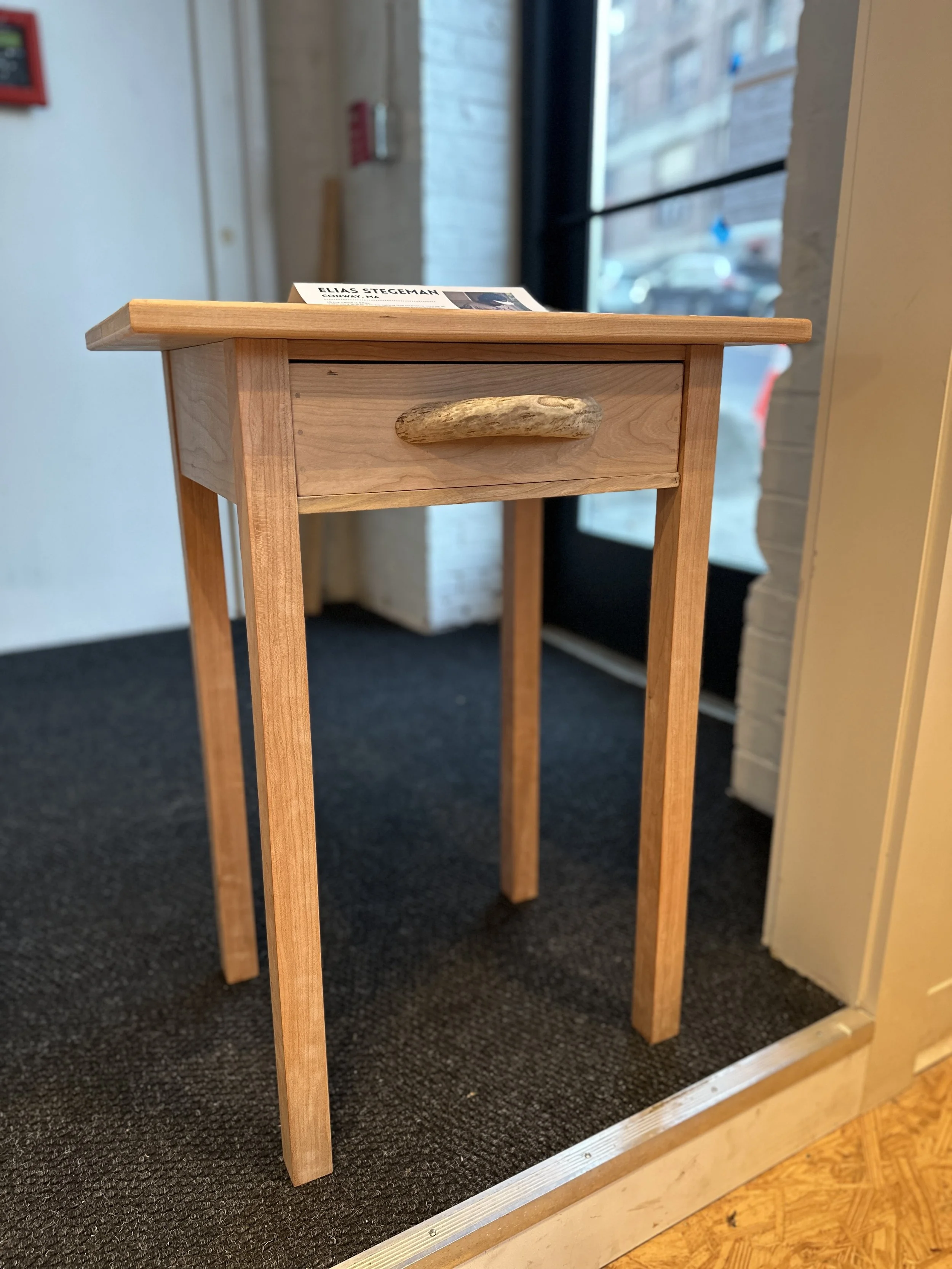
In Module 2, students will gain the fundamental skills required to manipulate and make wood-based furniture and products in most any woodshop through the project of making a Shaker side table. We’ll cover the most commonly used stationary and handheld power tools in workshops today, while also introducing and practicing a broad range of fabrication techniques.
Rough Milling: Extending the knowledge gained in visits to the sawmill, students will learn step one of most any woodworking project: squaring a board. Students will be introduced to rough milling machining techniques including on the jointer, planer and table saw.
Machine Techniques: Building on their skills from rough milling, students will learn to safely operate the bandsaw, compound miter saw, drill press, router table and belt, edge, spindle & disc sanders.
Woodturning: Students will learn to safely operate a lathe and use gouges to turn a square into a cylinder, and create beads, coves and tapers.
Project Preparation: Students will learn how to read furniture plans and elevations, create stock lists, calculate board feet and create a list detailing the order of operations for fabrication.
Principles of Joinery: Students will be introduced to joinery techniques including edge joints, mortise & tenon, through & blind dovetails, grooves and table top fasteners.
Glue-Up Basics: Students will learn the fundamentals of lamination practices, working with clamps and wood adhesives.
-
Students will make a Shaker side table complete with a drawer. Works will either be completed or nearly completed. We say nearly completed as the concept of ‘finished’ or ‘complete’ can be a subjective term within the world of fine woodworking projects. Individual students may wish to spend additional time completing the project with their newly acquired skills outside of scheduled class hours.
-
Heather Tauck & Erin Bell (see bios in section below).
Module 3: Computer-Assisted Techniques
(Week 6)
Computer Numeric Control (CNC) + Computer Aided Manufacturing & Making with Plywood
-
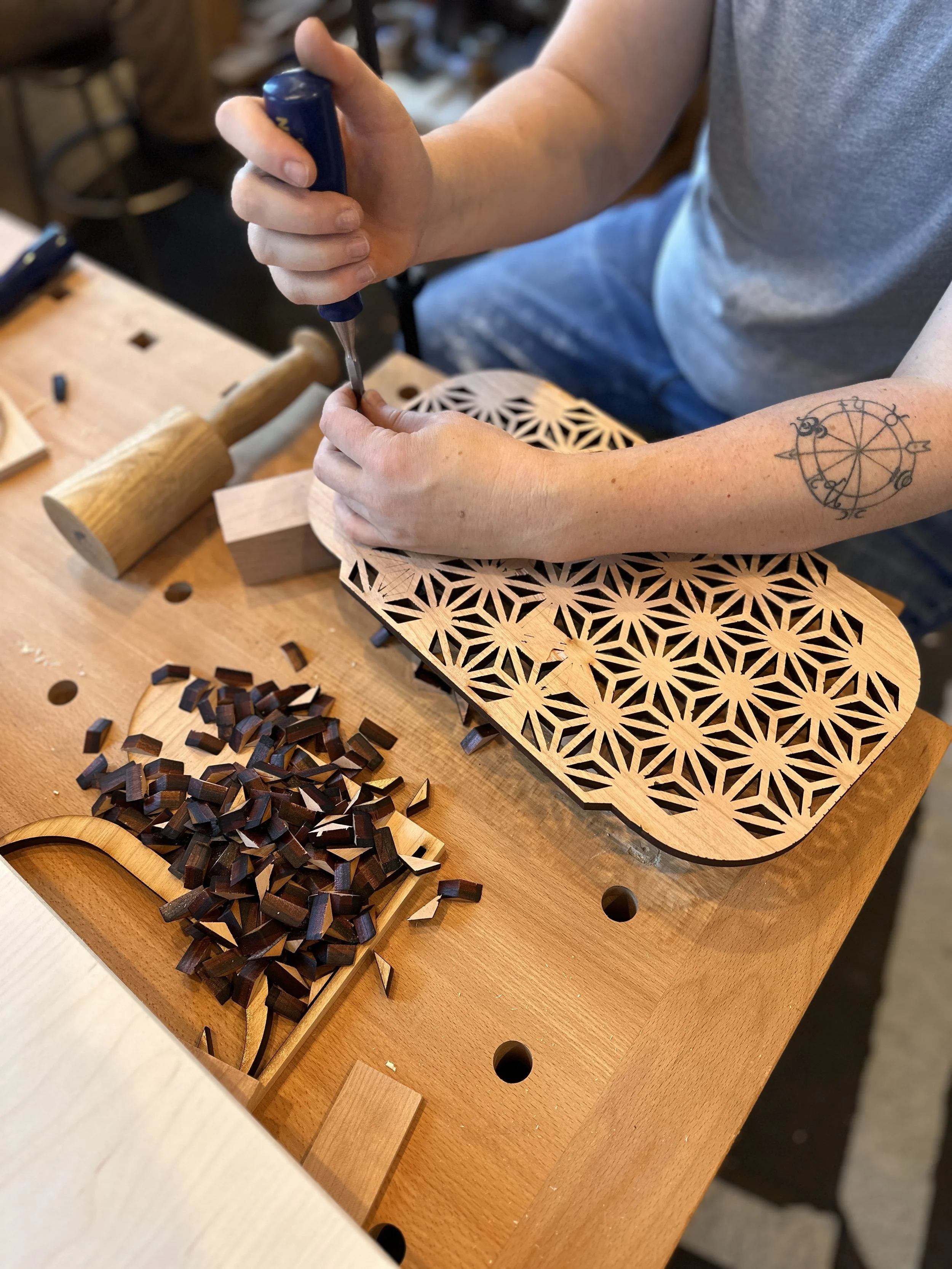
Module 3 serves to introduce students to digital design and fabrication techniques while simultaneously opening up creative opportunities that blend computer-aided and traditional approaches.
3D Design Workflow: An overview of the benefits of drawing in 3D, emphasizing the ability to read plans and elevations, and understanding their relationship to CAD/CAM systems.
Making with Plywood: Students will learn the benefits of working with sheet goods, how to apply edge banding, and dowel joinery. While we will be emphasizing the time-saving opportunities of CNC, there will be ample focus on building without these resources.
CNC Operation: Students will learn the basics of how to safely operate the Phantom CNC, laser engraver and Shaper Origin.
Embellishing + Branding: We will explore engraving, inlays and texturing using CAM techniques.
-
All students will make a decorative sliding lidded box. Projects may be completed or nearly completed. We say nearly completed as the concept of ‘finished’ or ‘complete’ can be a subjective term within the world of fine woodworking projects. Individual students may wish to spend additional time completing the project with their newly acquired skills outside of scheduled class hours.
-
Rowan Norlander-McCarty (bio in section below).
Module 4: Casework & Design
(Weeks 7 & 8)
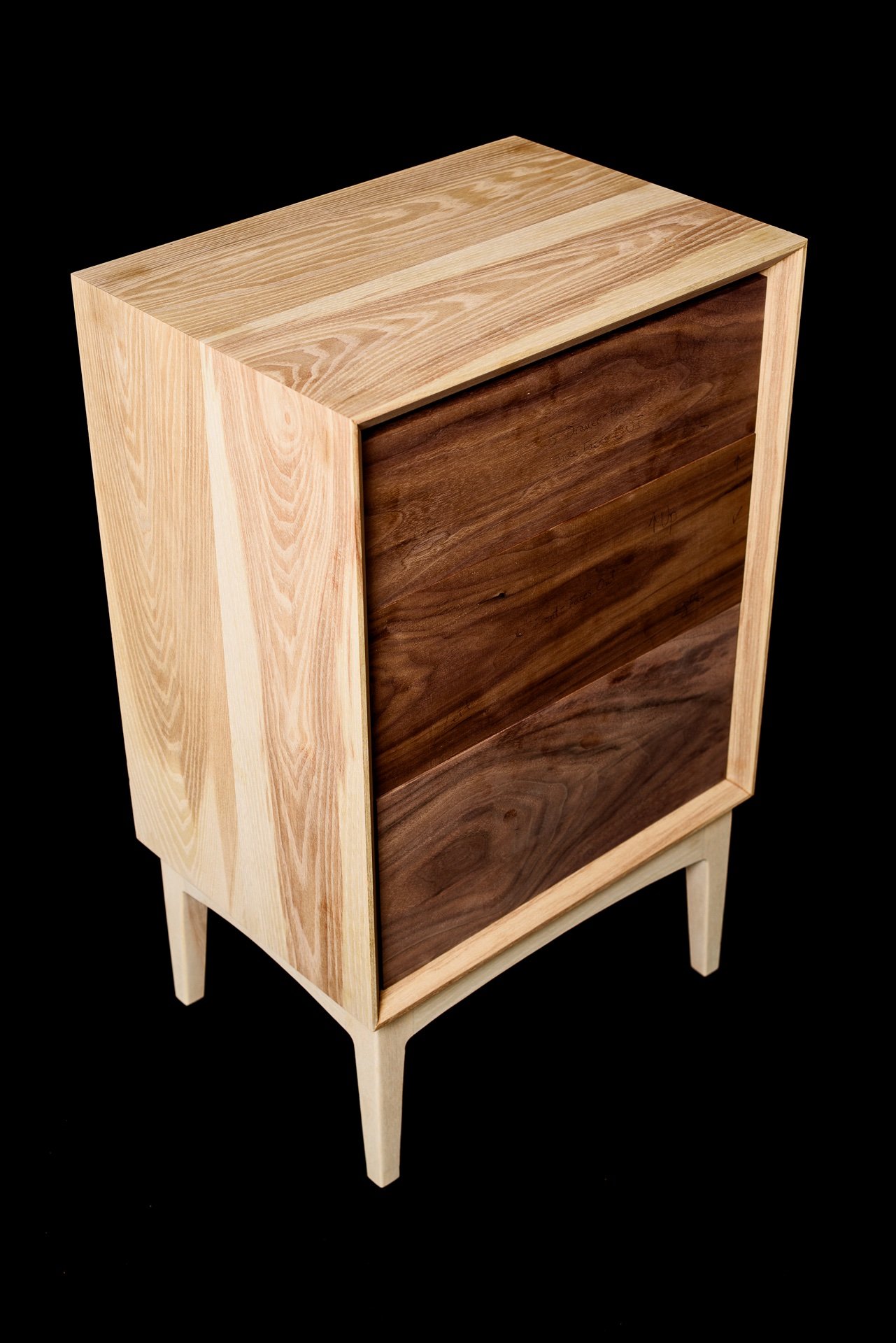
The Design Process, Drawing & Drafting Skills, and Casework Construction
-
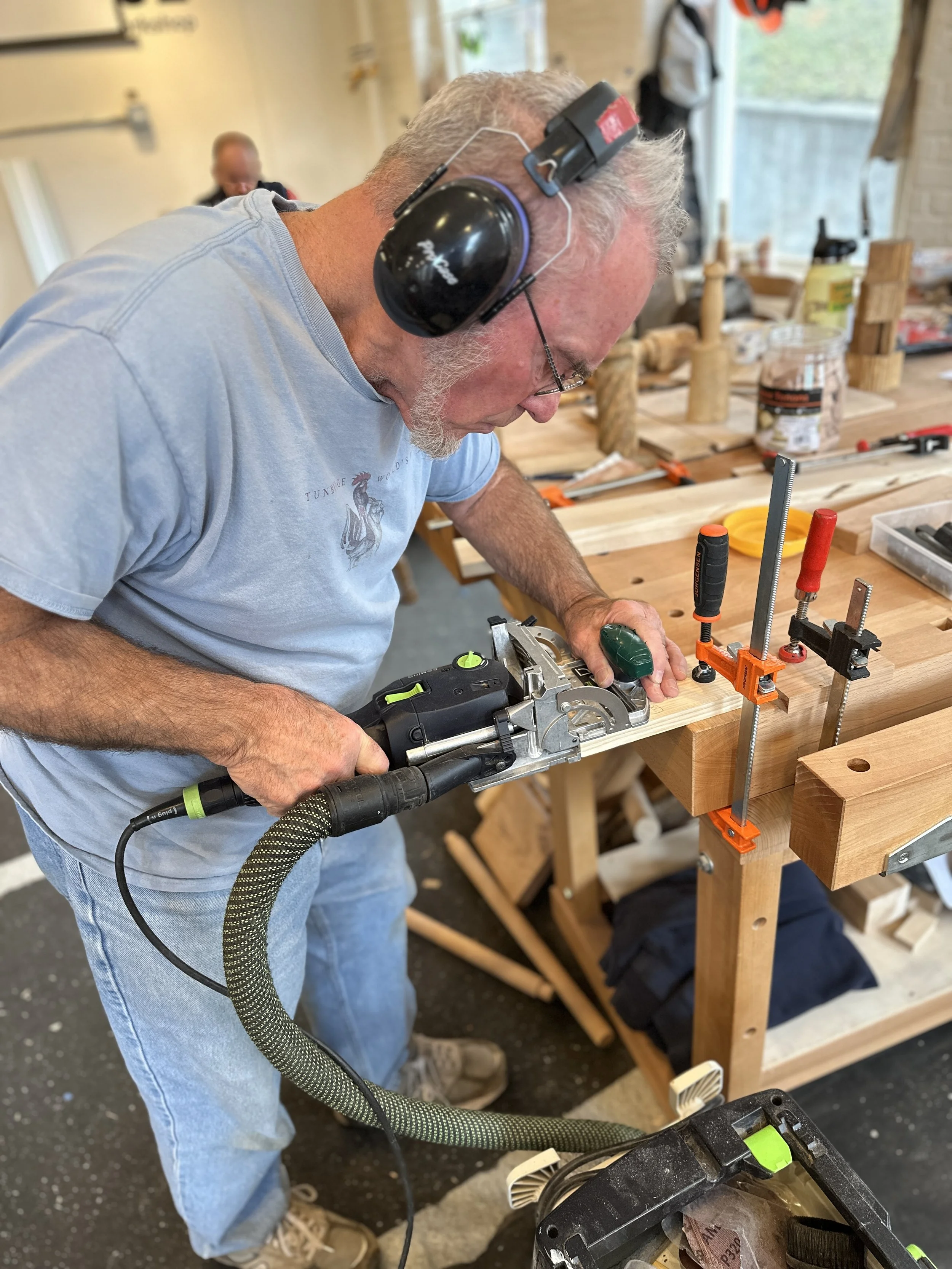
In the final module, students will synthesize the skills gained in the first six weeks of the program to design and build their own unique cabinet on a stand. Starting with pre-determined parameters, students learn to design furniture for longevity and expand on their machine woodworking skills.
Casework Design & Drafting: Students will work through an iterative process to sketch, model, and technically draft unique designs for a small cabinet on a stand.
Joinery Techniques: Students will build on their joinery techniques and be introduced to new methods, like Japanese joinery.
Door-Making: Students will be introduced to door-making techniques such as frame and panel, and sliding door construction techniques.
Joinery and Machine Techniques: Students will continue to build on their hand and machine skills, learning new techniques on the table saw, band saw and router table, among others.
Hardware Installation: Students will learn best practices for using and installing cabinet hardware such as hinges, figure-eights, knobs & pulls, and latches.
Special topic workshop: Photography with Tony Attardo
Photographer Tony Attardo will join us for the day to document the students' completed projects from the woodworking intensive. Each student will work individually with Tony to explore how photography can effectively convey the key attributes of their work.
-
All students will make a small cabinet on a stand. Projects will be completed or nearly completed. We say nearly completed as the concept of ‘finished’ or ‘complete’ can be a subjective term within the world of fine woodworking projects. Individual students may wish to spend additional time completing the project with their newly acquired skills outside of scheduled class hours.
-
Heather Dawson and Heather Tauck.
Tony Attardo for photography (see section below for bios).
Meet Our Instructors
-

✺
Heather Tauck serves as the Program Leader for the intensive and has been teaching at Hatchspace since 2022. She is a graduate of The Evergreen State College and The North Bennet Street School, and she brings 15 years of woodworking experience to her role. She cares deeply about creating a classroom atmosphere focused on safety, community building and self-expression. Heather believes that woodworking classes offer students more than practical hands-on skills—they inspire creativity, boost confidence, and foster a sense of belonging, which can have a meaningful impact on student’s lives and help them connect with what truly matters. In her personal practice, she is interested in making functional pieces that explore modern and contemporary forms, illustrate expert craftsmanship, and highlight the natural beauty of wood. Based in Western Massachusetts, Heather makes and exhibits her work locally. You can view her creations at HT Woodshop and on Instagram.
-

✺
Charles Thompson makes chairs and carvings in a humble workshop on a hill in western Massachusetts, and has been teaching at HatchSpace since 2020. His work reflects on vernacular forms, and uses a mixed vocabulary of techniques, patterns, and materials that speak to the efficacy of hand work. He typically works straight from the log, splitting, bending, manipulating, then rejoining wood in a process that leverages personal intention and celebrates common materials. He senses, in the back of his mind and now in his work, a deepening curiosity as to what could count as his own tradition. Learn more about Charles at his website here.
-

✺
Tom Bodett is a lifelong carpenter and woodworker who founded HatchSpace in 2019. In addition to his successful 40-year career in publishing and broadcasting, he now devotes himself to serving the rural communities he has lived in, and has always lived in. With half of his adult life spent in Alaska and the other half in Vermont, Bodett has learned to appreciate the beauty and the bounty of our natural landscape and the indomitable spirit of the communities that occupy it. Through hands-on effort and philanthropy, Tom and his wife Rita work to leave these places better than they found them, and have learned when to leave well enough alone.
-

✺
Erin Bell is the owner and operator of Curiosity Woodworks, serving the Upper Valley community and the surrounding New England area since 2017 with sustainable and locally made furniture and woodworking design. Instead of specializing in one certain genre of furniture, Erin revels in the opportunity to work with different clients on bespoke projects that serve their needs and dreams through imaginative design, innovative resourcing and engineering, and classic hand and power tool fabrication. View Erin's work on Instagram.
-

✺
Heather Dawson is a furniture designer, studio woodworker, and woodworking instructor based in western Massachusetts. A 2014 alumnus of the collaborative Certificate in Furniture Design at Massachusetts College of Art & Design and North Bennet Street School in Boston, MA, Heather is an assistant professor in the program today. She is an experienced journeyman cabinetmaker and project manager and has devoted over a decade to developing curricula for adults to learn new skills in community woodshops. Heather's personal studio practice focuses on thoughtfully sculpted joinery, sustainability, and the invocation of delight. She has exhibited widely and is currently making new work in her Easthampton, MA studio. View Heather's work on her website.
-

✺
Rowan Norlander-McCarty is the Director of Operations at HatchSpace. He is a cabinetmaker driven by curiosity and the pursuit of quality. He believes that in melding the industrial, applied, and fine arts, we all have the opportunity to live in a more harmonious, sustainable world. Rowan has worked as a cabinet maker, fabricator, machine operator, custom millwork installer and artist assistant for a range of design studios and creative businesses. A lover of trees from seed to stump, when not in the shop you’ll find Rowan in the forest or the garden.
-

✺
Anthony Attardo is a Southern New Hampshire based emerging photographer. He is passionate about using his camera to illustrate the essence of the day to day found in small urban spaces, and as a means to bring cultures and lives together.
From an early age, the conversation at the Attardo family dinner table wasn’t about food, it was treating people with dignity and respect no matter where they were in life, what they looked like, or where they came from. Today, this powerful lesson is the driving force of Anthony’s photography. His photographs tell stories from a personal perspective, and his images reveal a belief that respect and humility are the greatest common denominators.
Anthony’s photographs have been exhibited at the Vermont Center for Photography in Brattleboro, VT, the Brush Art Gallery in Lowell, MA, and the Griffin Museum of Photography in Winchester, MA. He has studied at the New England School of Photography, the New Hampshire Institute of Art, and the Photography Atelier at the Griffin Museum of Photography. View Anthony’s work on his website.

How to Enroll
Important Dates
Program runs Sunday, September 13 through Friday November 6
Orientation Sunday, September 13 from 2-6pm (opening light dinner served)
Class meetsM-F, 9am to 5pm, with some optional weekend & evening activities
Students should anticipate spending at least 25 additional studio hours on weekends and/or evenings to complete assignments and practice skills
Other Considerations
Attendance - Students are expected to attend all scheduled class sessions. The pace is rigorous, and absences not only present difficulty for the individual student, but disrupt the learning of the cohort. A limited number of excused absences, usually up to three, may be permitted with the permission of the lead instructor. Students with unexcused or excessive absences may be dismissed without a refund.
Community Standards - Students are required to uphold all community standards, values, policies and member agreements of HatchSpace. Most standards may be viewed online here, but class specific standards will also be reviewed and agreed to at orientation. Students who do not uphold standards may be dismissed without a refund.
Technical Standards - Students must be able to lift and/or maneuver tools or materials weighing up to 50lbs, possess gross and fine motor skills to manipulate tools and materials, work sitting or standing at a workbench for up to 8 hours (with reasonable breaks), be mobile within the work facility, crouch, stoop, crawl or kneel to adjust tools and materials, work in close proximity to classmates, work in a loud environment, be able to visualize three dimensional objects, receive instruction in English and communicate with instructors/staff in English, and generally be prepared for an educationally and creatively stimulating, challenging and fast paced program.
Application Required. No application deadline. Applicants are reviewed on a rolling basis.
Our intensive is perfect for advanced beginners and intermediate woodworkers looking to take their practice to the next level.
Our intensive welcomes beginners, though this should not be the first woodworking course you’ve ever taken. We strongly recommend students complete at least one short-term woodworking class before joining the intensive, or be able to demonstrate other relevant experience. We offer a range of short-term classes that can easily be completed before the intensive begins, and we’re happy to advise interested students on which short courses may work best. Please reach out to us to discuss at info@hatchspace.org.
Tuition for Fall 2026 is $7,200. Tuition includes:
320 clock hours of expert instruction
Exclusive access to a devoted workshop for the class
A private and devoted Sjoberg workbench and station in a shared studio workshop that is used only by other students and instructors of the intensive
Access and training for safe use of all needed stationary machines and non-consumable equipment
Access to most needed hand tools and training for safe use
Membership to HatchSpace for the duration of the program, which includes access to all shared workshops on evenings and weekends
Some shared consumables (limited supply of glues, sandpapers, and basic finishing supplies for the entire class to share)
Tuition does not include:
Most materials (i.e. most lumber, some hand tools). Students should budget a minimum of $800 for lumber and required personal tools / equipment. Required lumber will be purchased through the HatchSpace Lumber Store.
Personal consumables (i.e. glue, sandpaper, finishes)
Housing or board / food
Deposit Required
A $650 deposit is required once accepted to hold your seat in the program.
Payment Plan Available
Our payment plan distributes the cost of tuition across three installments with payments due on the following schedule:
$650 due after accepted and at time of registration.
$2,183 due by July 1
$2,183 due by August 1
$2,184 due by September 1
For any student registering after July 1, the payment plan will be adjusted to two installments.
Withdrawals, Refunds & Cancellations
A student who withdraws from the course 45 days or more from the start of class (by July 31st) will receive 100% of their deposit and fees, less a $95 non-refundable registration fee. No refunds will be issued for withdrawals less than 45 days from the start of the class (August 1 or after).
Vermont Advancement Grants
Vermont residents are encouraged to consider whether or not they may be eligible for Vermont Advancement Grants. Students pursuing VT Advancement Grants must first be accepted and submit a deposit to hold their seat while their VSAC grant is considered.
Other Scholarships
HatchSpace seeks to make our programs accessible to early career & economically disadvantaged individuals. We also acknowledge how women, LGBTQIA+ community members, and people of color have historically been under-represented and under-celebrated in trade and craft careers. With this in mind, HatchSpace makes a limited number of need-based, partial scholarships available via the HatchSpace Scholarship Fund. Those students who wish to be considered for need-based scholarships should indicate their intention on the enrollment form, and we strongly encourage students seeking scholarship funds to apply no later than June 1, 2026. If admitted to the program, a $650 deposit is still required to register while awaiting scholarship consideration. In the event an admitted student seeking scholarship is unsuccessful in obtaining an award that meets their needs for participation, the deposit will be refunded.
Scholarship awards will be determined by July 1 for those who applied by June 1, and any remainder funds, if available, distributed on a rolling basis thereafter.
Payment Plans are also available to all students.
Note: HatchSpace reserves the right to update and/or modify all program policies. Applying does not guarantee entry to the program.
✺ Frequently Asked Questions ✺
-
At this time, HatchSpace does not offer housing directly, however, HatchSpace has many connections to providers of local housing and we can assist any student needing temporary housing in the Brattleboro area in their efforts to secure housing. We invite students who may need assistance in securing housing to be in communication with us at info@hatchspace.org.
-
Yes! As stated above, partial scholarships are available. Please see the “How to Enroll” section above for more information.
-
Amtrak provides service to Brattleboro via The Vermonter train line, and the MOOver! operates bus routes in our region. If one were able to secure housing in the immediate downtown area, it is conceivable that a car might not be required. That said, students should also know that cabs and ride share services are less available in Brattleboro than in cities, and we encourage you to thoughtfully consider these aspects ahead of time. Most people who live in Brattleboro have access to or share a car.
-
We are currently working to develop a materials list and will communicate any tools and equipment that students should secure themselves, to enrolled students.
-
There will be optional activities on some nights and weekends, but attendance at these events will not be mandatory. That said, many students desire to continue working on their projects on the nights and weekends, and we suggest students plan for studio time outside of class time.
-
Our program is designed for adult learners. If you will have finished high school but not yet be 18 by the start of our program (September 8, 2025), we encourage you to reach out to us to discuss before enrolling.
-
Students leave with a Certificate of Completion issued by HatchSpace that verifies the 300 hours of woodworking instruction. At this time, we are not able to offer college credit or credentials.
Why HatchSpace?
Founded in 2019, HatchSpace is home to a growing community of innovators working with wood like no other. We provide access to the tools and training necessary to build what you love, and launch careers in the trades and crafts. As our founder, Tom Bodett says, we’re all at our best when we’re making. Learn more about HatchSpace by watching the video below, and by visiting our About page above.